PubQ's home page on a tablet on a wooden table, next to keys and a pen

Checkout on the homepage

About the project

PubQ in Norrköping makes meal service software. From the app and the kiosk to the point of sale, ordering and payment go through the same platform. They needed a website that shows everything at once.

services

Digital

,

Design

client

PubQ
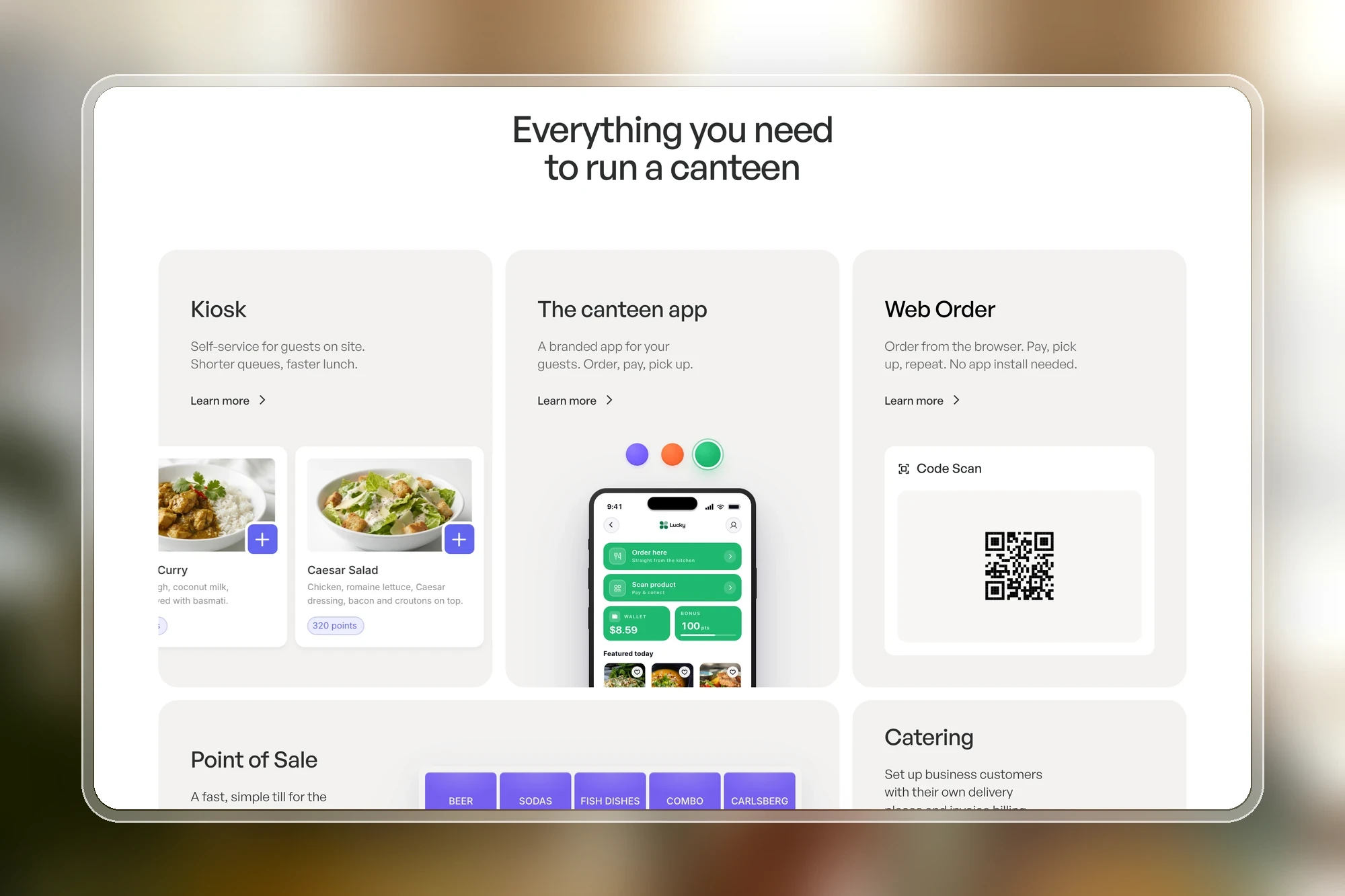
The 'Everything you need to run a canteen' section on PubQ's homepage, in a window
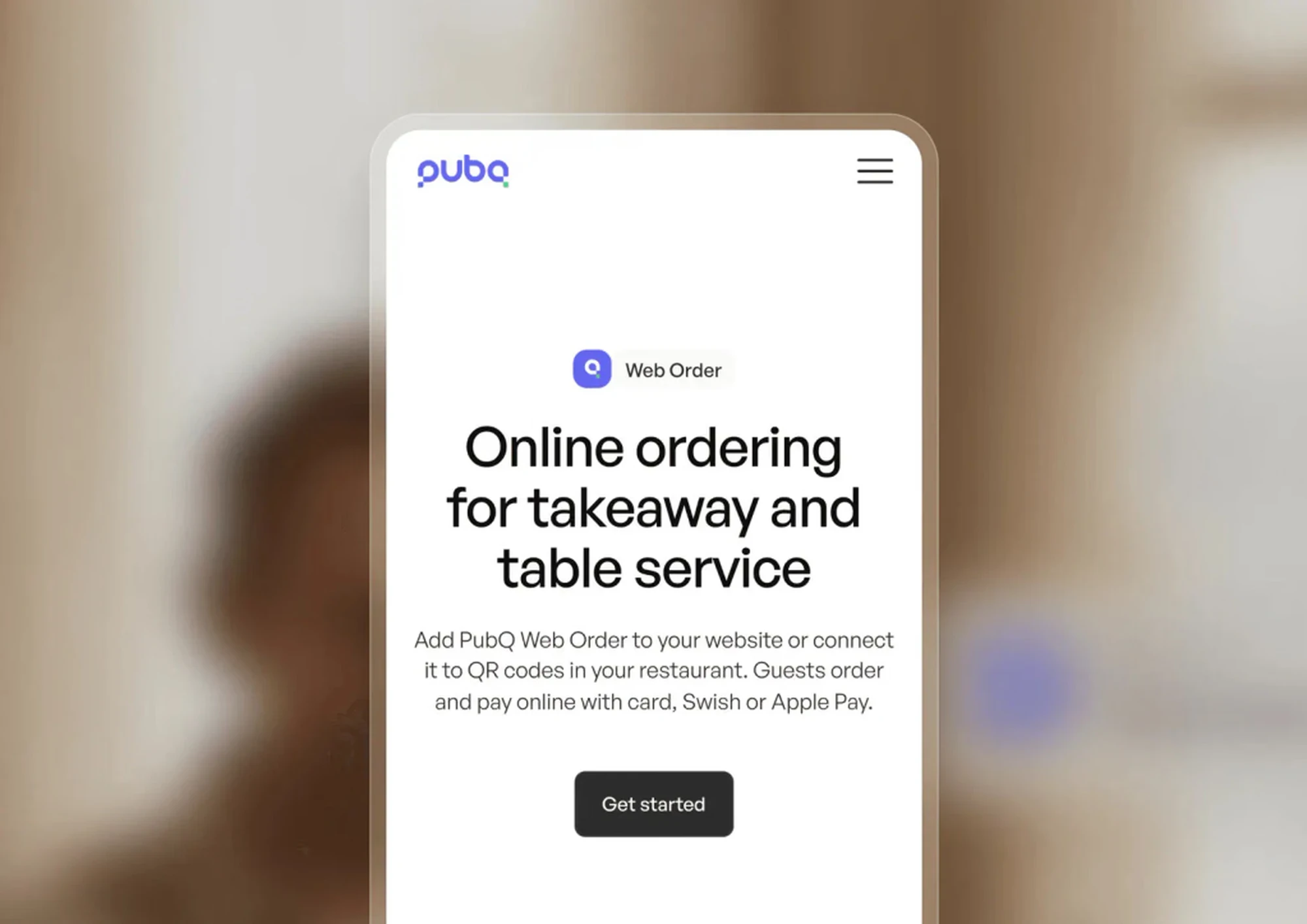
PubQ's mobile web ordering page
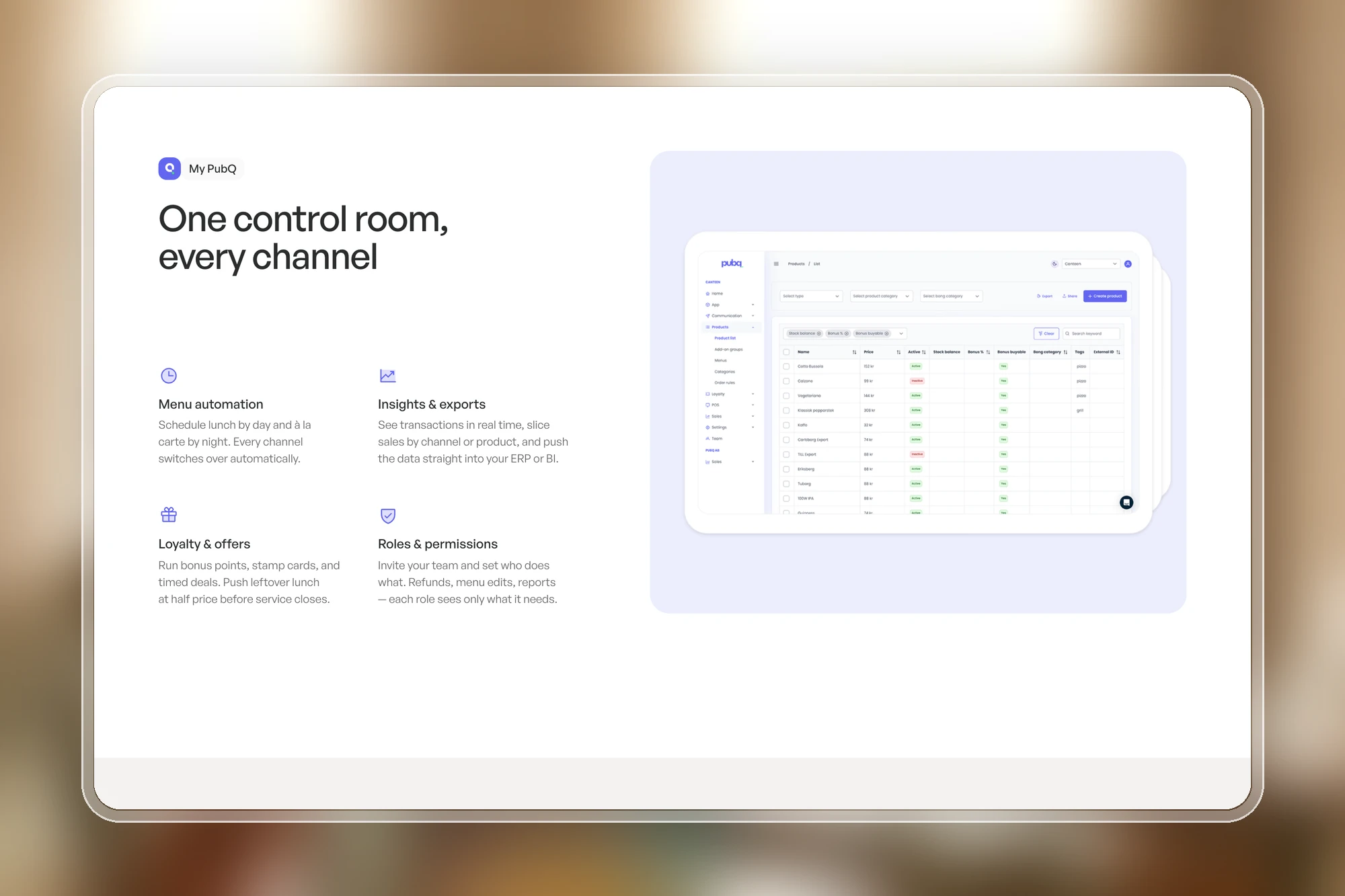
The "One control room, every channel" section on PubQ's homepage, in one window
The section about the kiosk on PubQ's website: Members recognized at the kiosk and Tap to pay, no extra terminal
The 'Everything you need to run a canteen' section on PubQ's homepage, in a window
The "One control room, every channel" section on PubQ's homepage, in one window
PubQ's mobile web ordering page
The section about the kiosk on PubQ's website: Members recognized at the kiosk and Tap to pay, no extra terminal

Concept

During 2026, we designed and built pubq.se in Framer. Screenshots become outdated quickly, so the product is built directly into the site. The checkout, online ordering, and coffee card are code components and not images. Services are organized by product and by industry, allowing both a restaurant and an arena to find their own way in.
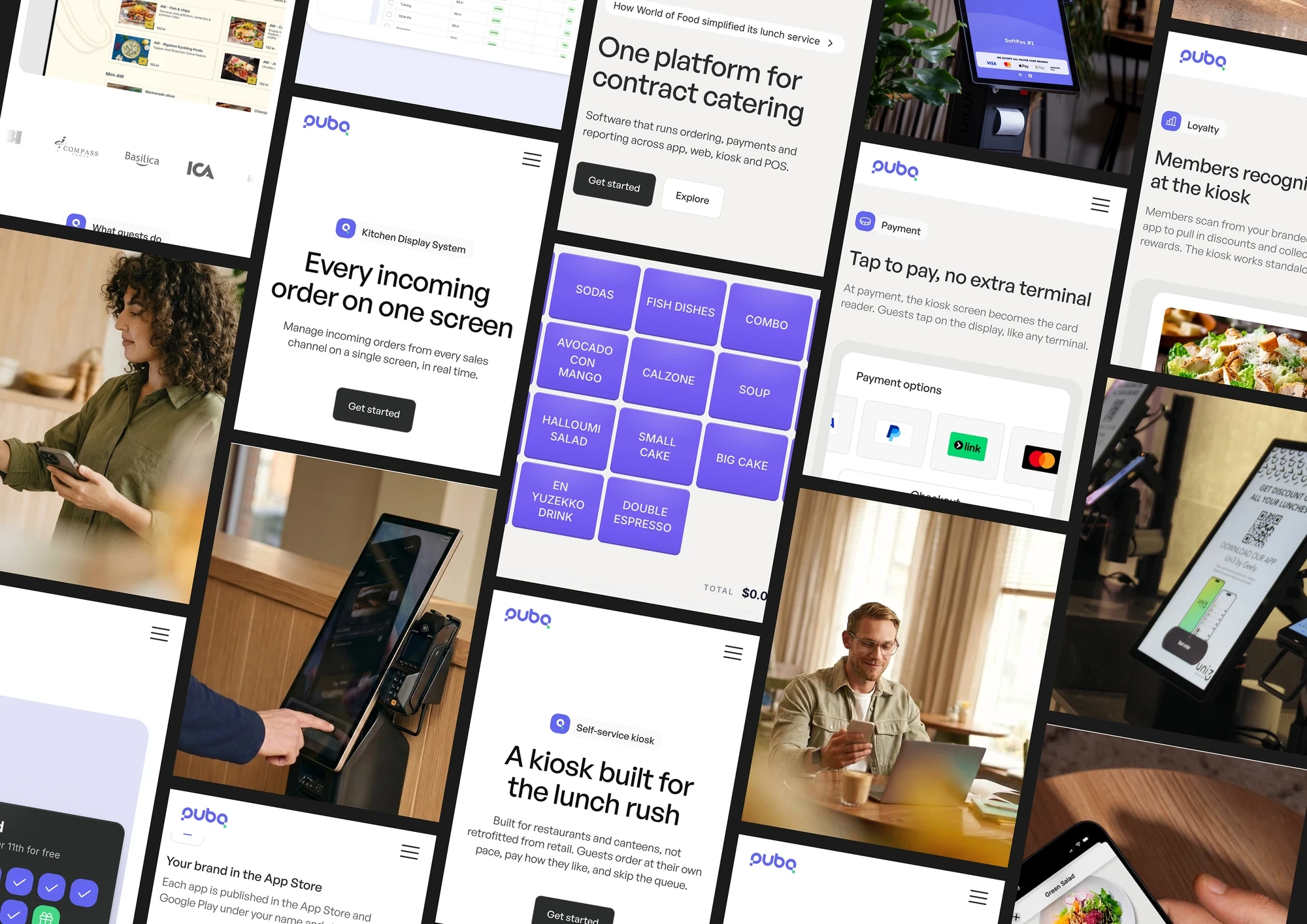
An angled grid of PubQ's website and product: the homepage, kiosk, checkout, kitchen display screen, app, and card payment

Visual Imagery

We edited the photos of guests and dining areas to make them feel cohesive: warm light and a blurred foreground, just like in a real lunch restaurant. We reserved color for the product, where PubQ's indigo anchors the POS system and the app.

The site has been selected for the A1 Gallery, a curated collection of well-crafted websites.

A woman orders at a screen and pays with her phone, one of the images on PubQ's website
A guest at their laptop while staff brings out food, one of the images on PubQ's website
A man with a mobile phone and laptop in a lunch restaurant, one of the images on PubQ's website

FAQ

Do you build both web and app?

Yes. Websites, apps, and digital services, from user research to production and operation.

The way of working looks the same regardless of technology. We start with the users' needs, develop and test a proposal, and then build in steps that can be released continuously rather than in a single large delivery.

We also take over services that someone else has built. We then start with a review of the code, content, and operation, so that you know what you have before we promise anything.

Read more

Do you build both web and app?

Yes. Websites, apps, and digital services, from user research to production and operation.

The way of working looks the same regardless of technology. We start with the users' needs, develop and test a proposal, and then build in steps that can be released continuously rather than in a single large delivery.

We also take over services that someone else has built. We then start with a review of the code, content, and operation, so that you know what you have before we promise anything.

Read more

Do you build both web and app?

Yes. Websites, apps, and digital services, from user research to production and operation.

The way of working looks the same regardless of technology. We start with the users' needs, develop and test a proposal, and then build in steps that can be released continuously rather than in a single large delivery.

We also take over services that someone else has built. We then start with a review of the code, content, and operation, so that you know what you have before we promise anything.

Read more

How do you make sure it is accessible?

WCAG is part of the build from the start, not an afterthought review. For legal requirements such as EAA, LPTT, and DOS, we connect the accessibility service.

In practice, this means that contrasts, keyboard navigation, heading structure, and screen reader support are handled when the interface is designed and coded, long before it is to be delivered.

We test continuously using both tools and by hand. Automated tests catch some of the requirements; the rest require someone to sit down with a keyboard and screen reader.

Read more

How do you make sure it is accessible?

WCAG is part of the build from the start, not an afterthought review. For legal requirements such as EAA, LPTT, and DOS, we connect the accessibility service.

In practice, this means that contrasts, keyboard navigation, heading structure, and screen reader support are handled when the interface is designed and coded, long before it is to be delivered.

We test continuously using both tools and by hand. Automated tests catch some of the requirements; the rest require someone to sit down with a keyboard and screen reader.

Read more

How do you make sure it is accessible?

WCAG is part of the build from the start, not an afterthought review. For legal requirements such as EAA, LPTT, and DOS, we connect the accessibility service.

In practice, this means that contrasts, keyboard navigation, heading structure, and screen reader support are handled when the interface is designed and coded, long before it is to be delivered.

We test continuously using both tools and by hand. Automated tests catch some of the requirements; the rest require someone to sit down with a keyboard and screen reader.

Read more

What happens after launch?

We are still here if you want us. After launch, you can sign a rolling agreement for management and support.

It covers technical maintenance, security updates, monitoring, and further development. This also includes ongoing follow-up, such as how an AI assistant responds or how the site converts.

The scope is determined by how business-critical the service is. If you wish to handle operations yourselves, we will hand over the documentation and go through it with you.

Read more

What happens after launch?

We are still here if you want us. After launch, you can sign a rolling agreement for management and support.

It covers technical maintenance, security updates, monitoring, and further development. This also includes ongoing follow-up, such as how an AI assistant responds or how the site converts.

The scope is determined by how business-critical the service is. If you wish to handle operations yourselves, we will hand over the documentation and go through it with you.

Read more

What happens after launch?

We are still here if you want us. After launch, you can sign a rolling agreement for management and support.

It covers technical maintenance, security updates, monitoring, and further development. This also includes ongoing follow-up, such as how an AI assistant responds or how the site converts.

The scope is determined by how business-critical the service is. If you wish to handle operations yourselves, we will hand over the documentation and go through it with you.

Read more

More cases