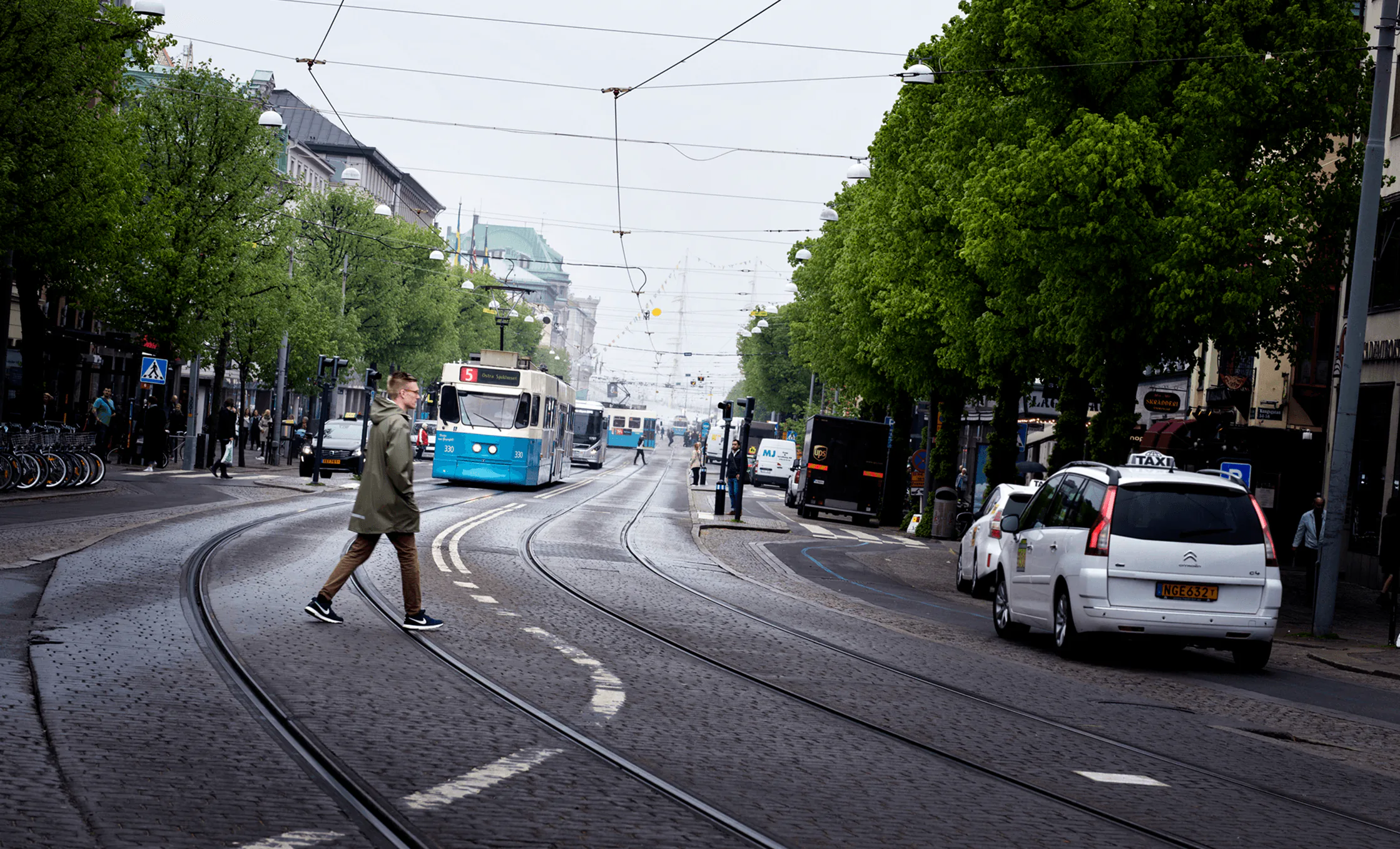
Crossing the tram tracks on a tree-lined street in Gothenburg

What gives you energy?

About the project

Almost all electricity companies sell on price. Göteborg Energi wanted to win customers on something else: being a simple and secure choice. We turned the electricity contract into a question of what gives Gothenburgers energy.

services

Communication

,

Strategy

client

Göteborg Energi

Three advertisements from Göteborg Energi: Many have the same electricity contract for years, Do you work from home? and Are you on parental leave?
Tablet showing a video advertisement from Göteborg Energi featuring a smiling woman in the sunset
Three advertisements from Göteborg Energi: Many have the same electricity contract for years, Do you work from home? and Are you on parental leave?
Tablet showing a video advertisement from Göteborg Energi featuring a smiling woman in the sunset

Background

Göteborg Energi wanted to get more people to sign electricity contracts via the web. But not by appearing to be the cheapest. The category is perceived as confusing and difficult, and price is the only thing most people compare.

The strategic foundation was already there, built on previous sustainability work. The task became to use the same communication logic closer to the business, and to make the choice of electricity trading company secure enough to act upon.

Mobile ad with “Do you work from home?” and poster with “What gives you energy?”

Welcom's role

In 2025, we built an “always on” system that followed the customer all the way, from recognition to signed agreement. The messages were divided into tracks: Gothenburgers' own energy company where the surplus goes back to the city, and the smart tools in the app.

In 2026, we made the same strategy more emotional. The question “What gives you energy?” opened up in family, nature and everyday life, and connected further to Göteborg Energi as a reliable electricity supplier. Closer to the decision, the company took the role of guide, because not all electricity contracts suit everyone.

We did the media planning together with Vekst. The measurements from the last two years show a strengthened brand position and more effective campaigns.

FAQ

What is a message platform?

Your narrative, your core messages, and your tone of voice gathered so that the entire organization can use them. It determines what you say, before the choice of channels determines where.

In practice, it is a short document: what you do, for whom, why it matters, and what evidence you rely on. Plus what it sounds like when a salesperson, a recruiter, and a CEO say the same thing in their own words.

The benefit becomes apparent when several people need to communicate at the same time. Without a platform, every initiative becomes a new negotiation about what applies. With it in place, work goes faster and the messages remain cohesive over time.

Read more

What is a message platform?

Your narrative, your core messages, and your tone of voice gathered so that the entire organization can use them. It determines what you say, before the choice of channels determines where.

In practice, it is a short document: what you do, for whom, why it matters, and what evidence you rely on. Plus what it sounds like when a salesperson, a recruiter, and a CEO say the same thing in their own words.

The benefit becomes apparent when several people need to communicate at the same time. Without a platform, every initiative becomes a new negotiation about what applies. With it in place, work goes faster and the messages remain cohesive over time.

Read more

What is a message platform?

Your narrative, your core messages, and your tone of voice gathered so that the entire organization can use them. It determines what you say, before the choice of channels determines where.

In practice, it is a short document: what you do, for whom, why it matters, and what evidence you rely on. Plus what it sounds like when a salesperson, a recruiter, and a CEO say the same thing in their own words.

The benefit becomes apparent when several people need to communicate at the same time. Without a platform, every initiative becomes a new negotiation about what applies. With it in place, work goes faster and the messages remain cohesive over time.

Read more

We already have a brand platform, do we need this?

Often, yes. The brand platform says who you are; the communication strategy says how you tell it, and to whom.

Brand work usually stops at position, promise, and values. This is the right basis, but it says nothing about which target groups should be reached first, which issues you should own in the debate, or what you should answer when someone questions you.

We therefore start with what you already have. If the platform holds, we build on it. If it does not match reality, we say so, with a proposal for what needs to be adjusted.

Read more

We already have a brand platform, do we need this?

Often, yes. The brand platform says who you are; the communication strategy says how you tell it, and to whom.

Brand work usually stops at position, promise, and values. This is the right basis, but it says nothing about which target groups should be reached first, which issues you should own in the debate, or what you should answer when someone questions you.

We therefore start with what you already have. If the platform holds, we build on it. If it does not match reality, we say so, with a proposal for what needs to be adjusted.

Read more

We already have a brand platform, do we need this?

Often, yes. The brand platform says who you are; the communication strategy says how you tell it, and to whom.

Brand work usually stops at position, promise, and values. This is the right basis, but it says nothing about which target groups should be reached first, which issues you should own in the debate, or what you should answer when someone questions you.

We therefore start with what you already have. If the platform holds, we build on it. If it does not match reality, we say so, with a proposal for what needs to be adjusted.

Read more

How do we start?

With a conversation about the current situation. Then we say what is needed. Sometimes it is less than you think.

The conversation is about where you stand, what you have tried, and what is causing the friction. We would love to see what you have already produced, regardless of how finished it is. That tells us more than a brief.

After that, you will receive a recommendation: a proposal for the first step, what it means in terms of time, and how much it costs. If you choose to do it yourself from there, the material is yours to use.

Read more

How do we start?

With a conversation about the current situation. Then we say what is needed. Sometimes it is less than you think.

The conversation is about where you stand, what you have tried, and what is causing the friction. We would love to see what you have already produced, regardless of how finished it is. That tells us more than a brief.

After that, you will receive a recommendation: a proposal for the first step, what it means in terms of time, and how much it costs. If you choose to do it yourself from there, the material is yours to use.

Read more

How do we start?

With a conversation about the current situation. Then we say what is needed. Sometimes it is less than you think.

The conversation is about where you stand, what you have tried, and what is causing the friction. We would love to see what you have already produced, regardless of how finished it is. That tells us more than a brief.

After that, you will receive a recommendation: a proposal for the first step, what it means in terms of time, and how much it costs. If you choose to do it yourself from there, the material is yours to use.

Read more

More cases